PSMF: The Extreme Fat Loss Protocol Everyone's Whispering About — And the Science Behind Why It Works
A deep-dive into Protein Sparing Modified Fasting — the benefits, the risks, the research, and how to do it right. Educational only; aggressive very-low-calorie protocols need appropriate medical context.
Updated 2026-05-03 · Physiq
PSMF: The Extreme Fat Loss Protocol Everyone's Whispering About — And the Science Behind Why It Works
A deep-dive into Protein Sparing Modified Fasting — the benefits, the risks, the research, and how to do it right.
There are diets. There are calorie deficits. There is intermittent fasting, low carb, keto, and a hundred other strategies that promise rapid fat loss and deliver mixed results.
And then there is PSMF.
The Protein Sparing Modified Fast occupies a different tier entirely — not a lifestyle diet, not a long-term eating pattern, but a deliberate, highly structured, short-term protocol designed to produce maximum fat loss in minimum time while protecting the muscle you've worked hard to build.
It's not trending. It doesn't have a celebrity spokesperson. It doesn't come with a nice Instagram aesthetic of colorful smoothie bowls.
What it has is decades of clinical research, a track record of rapid body transformation results, and a small but loyal following of athletes, competitors, and serious fitness enthusiasts who have used it to break through plateaus and get aggressively lean — fast.
This article covers everything you need to know about PSMF: what it is, how it works, what the science actually says, the real risks you need to respect, who it's right for, and how to use tools like PhysiqMacros.com to execute it correctly.
If you're going to go extreme, be smart about it.
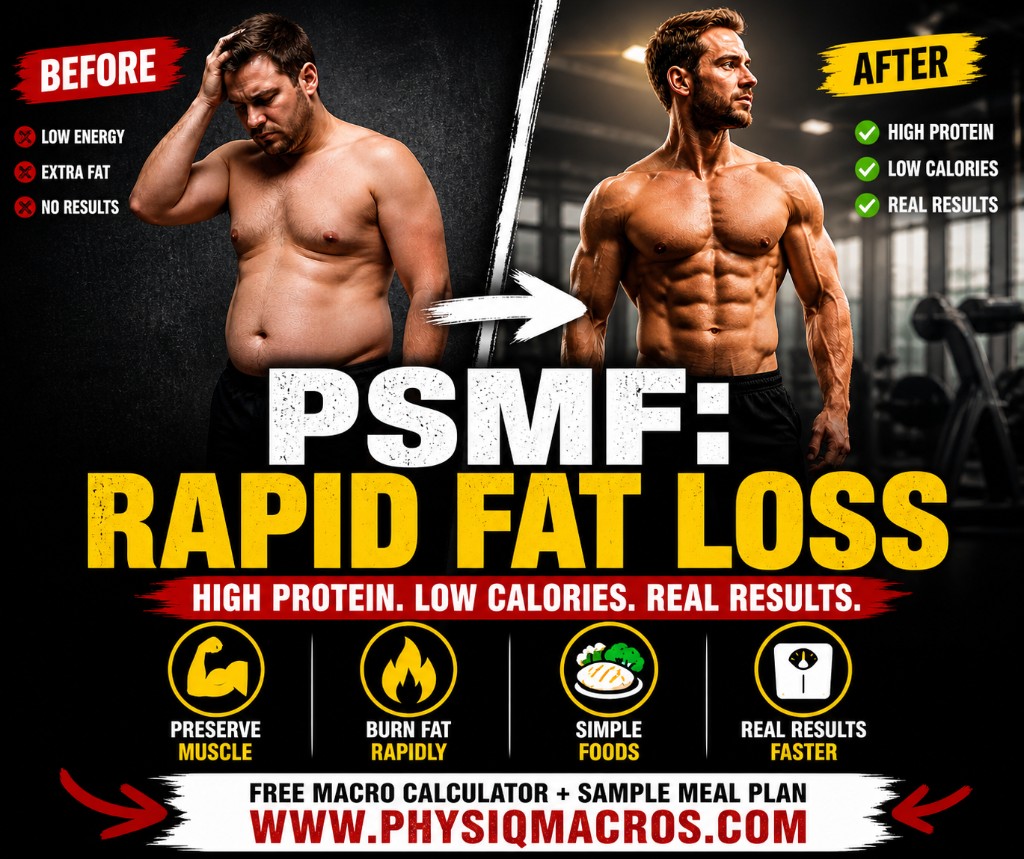
What Is PSMF? (Protein Sparing Modified Fast Explained)
PSMF — Protein Sparing Modified Fast — is a very-low-calorie diet (typically under 800 calories per day) structured around extremely high protein intake, near-zero fat, and near-zero carbohydrate. It was originally developed in the early 1970s by physician and researcher Dr. George Blackburn at Harvard Medical School as a medically supervised protocol for patients with obesity who required rapid, significant weight loss.
The concept was developed to mitigate the harms associated with protein-calorie malnutrition and nitrogen losses induced by either acute illness or hypocaloric diets — designed to adapt the patient's metabolism to use endogenous fat stores while preserving the body's protein content.
The core principle is elegant in its logic: by supplying the body with enough dietary protein to protect muscle tissue — while eliminating almost all dietary fat and carbohydrates — the body is forced to turn to stored body fat as its primary fuel source. The result is rapid fat loss with minimal lean mass sacrifice.
A PSMF typically calls for 0.8–1.2 grams of protein per pound of lean body mass (not total body weight) daily, depending on activity level, along with fluids and vitamin and mineral supplementation.
This is a critical distinction: protein targets on PSMF are based on lean mass, not scale weight — which is exactly why precision matters and why using a calculator like the one at PhysiqMacros.com is essential for getting your numbers right.
The PSMF Diet: What You Eat (and What You Don't)
The food list on a proper PSMF is lean, simple, and purposeful. There is very little room for variety because the entire point is to minimize caloric density while maximizing protein per calorie consumed.
PSMF-approved foods include:
- Lean protein: Skinless chicken breast, turkey breast, white fish (cod, tilapia, haddock, flounder), shrimp, egg whites, very lean beef (95%+ lean), non-fat Greek yogurt
- Non-starchy vegetables: Spinach, broccoli, zucchini, cucumber, lettuce, asparagus, celery, cauliflower — these add volume, fiber, and micronutrients with minimal caloric impact
- Fluids: Water, black coffee, plain tea, sparkling water, electrolyte supplements (essential — more on this below)
- Supplementation: A multivitamin, electrolytes (sodium, potassium, magnesium), and omega-3s are typically required since the diet's caloric restriction makes it impossible to meet all micronutrient needs through food alone
What's eliminated:
- All dietary fats (including oils, nuts, avocado, fatty fish, egg yolks)
- All carbohydrates (including grains, legumes, fruit, starchy vegetables)
- Any calorie-dense condiments, sauces, or dressings
A sample PSMF day looks like this:
- Breakfast: 6–8 egg whites scrambled with spinach, black coffee
- Lunch: 6–8 oz grilled chicken breast with steamed broccoli
- Snack: Low-carb protein shake mixed with water
- Dinner: 6–8 oz baked white fish with zucchini and asparagus
- Throughout the day: 3+ liters of water, electrolyte supplement
Simple. Stripped down. Extremely effective when executed correctly.
The Science Behind PSMF: Why It Works
PSMF isn't a fad — it's one of the more thoroughly researched aggressive fat loss protocols in the clinical literature. Here is what the science actually shows:
Rapid, Significant Fat Loss
Research shows that PSMF increases short-term weight loss while preserving muscle mass. One 2016 study of 12 adolescents on a PSMF found that participants lost an average of 25 pounds over a 6-month period. A 2020 study found that people who followed PSMF lost an average of 3% more weight over five years compared to people who didn't follow this diet.
That long-term advantage is significant. It suggests that when PSMF is followed correctly — including a structured refeeding exit — the results don't simply evaporate.
Muscle Preservation During Aggressive Caloric Restriction
The central mechanism that separates PSMF from starvation is its protein-sparing effect. According to the foundational work of Blackburn et al., the PSMF diet exhibits a protein-sparing effect based on the rationale that amino acids administered during fasting without glucose induce a much smaller insulin response, minimizing the antilipolytic effect of insulin and keeping fat-burning pathways open.
In plain terms: high protein intake without carbohydrates keeps insulin low, which keeps fat-burning elevated, while the amino acids themselves signal the body to protect lean tissue.
Reduced Hunger vs. Other Very-Low-Calorie Diets
One of the more surprising findings in the research: a study comparing PSMF to a protein-formula liquid diet found that PSMF subjects reported significantly less hunger and preoccupation with eating than liquid diet subjects during 2 of the 4 weeks on a very-low-calorie diet.
This is likely explained by the satiety effects of whole-food protein sources compared to liquid formulas — an important practical advantage for adherence.
Metabolic and Health Marker Improvements
Beyond fat loss, the research documents several secondary health benefits. In addition to helping people lose weight quickly, PSMF can have the added benefits of reducing blood sugar and insulin resistance in people with type 2 diabetes, as well as lowering cholesterol and blood pressure.
Long-Term Outcomes with Structured Refeeding
One study found that people who had followed the PSMF diet for two years weighed less on average than those who had followed conventional diets. The study also showed that people who received extra counseling for the refeeding phase of the diet were more likely to maintain their weight loss.
This is a crucial point: the exit strategy matters as much as the protocol itself. PSMF is not something you simply stop — there is a structured refeeding phase in which carbohydrates and fats are gradually reintroduced to prevent metabolic shock and rebound weight gain.
The Benefits of PSMF: What You Can Realistically Expect
When executed correctly, PSMF delivers a specific set of outcomes that few other dietary protocols can match in the same timeframe:
Rapid, visible fat loss. Most people following a strict PSMF report noticeable body composition changes within 1–2 weeks. The combination of a large calorie deficit, high protein intake, and near-zero carbohydrate causes both water retention loss and genuine fat loss to occur simultaneously at the start.
Muscle preservation. Unlike prolonged calorie restriction without sufficient protein, a properly structured PSMF gives your body the amino acids it needs to protect lean tissue. This is the entire premise of the protocol — "protein sparing" means keeping your muscle while burning your fat.
Plateau destruction. For people who have been dieting for months and hit a wall — weight hasn't moved in weeks despite consistent effort — PSMF can act as a reset. The aggressive calorie deficit breaks through metabolic adaptation and restarts fat loss momentum.
Metabolic benefits beyond the scale. The research-documented improvements in blood sugar, insulin sensitivity, cholesterol, and blood pressure make PSMF potentially valuable for those with metabolic risk factors — under medical supervision.
Simplicity of structure. Paradoxically, PSMF is one of the more cognitively simple diets to follow because the food choices are so limited. There's no macro balancing act or meal planning complexity — you eat lean protein and non-starchy vegetables until you hit your protein target.
The Risks of PSMF: What You Must Not Ignore
PSMF is not a casual diet. It is aggressive by design, and that aggressiveness comes with a real risk profile that must be understood and respected before starting.
Electrolyte Imbalance
This is the most serious and potentially dangerous risk of PSMF. Risks include electrolyte imbalances, gallstones, fatigue, mood changes, and nutritional deficiencies — which is why medical supervision is essential. More serious complications caused by electrolyte imbalances can occur, and most people on PSMF find it impossible to get enough nutrients from food alone given how low in calories the diet is.
Sodium, potassium, and magnesium must be actively supplemented throughout the protocol. Electrolyte imbalances left unchecked can cause muscle cramps, heart palpitations, dizziness, and in severe cases, more serious cardiac events. This is not a scare tactic — it is physiological reality.
Fatigue and Low Energy
The calorie restriction on PSMF is extreme. Most people experience significant fatigue, especially during the first week as the body adapts to using fat for fuel. Cognitive function can decline. Workout performance will suffer. This is expected and manageable — but it means PSMF is not a protocol for people with high daily physical or cognitive demands who cannot afford a temporary reduction in performance.
Hormonal Disruption (with Prolonged Use)
PSMF is not meant to be maintained long term. After approximately 6 months, individuals transition into a refeeding phase, in which they slowly reintroduce more calories and carbohydrates. Extended PSMF beyond its intended timeframe risks hormonal disruption, particularly in women. Reproductive hormones, thyroid function, and cortisol can all be affected by prolonged severe caloric restriction.
Gallstone Formation
Rapid weight loss of any kind — not just PSMF — is associated with an increased risk of gallstone formation. This is a known side effect of very-low-calorie diets generally and should be discussed with a physician before starting.
Rebound Weight Gain Without a Proper Exit Strategy
People who received extra counseling for the refeeding phase of the diet were more likely to maintain their weight loss. Without a structured, gradual reintroduction of calories, carbohydrates, and fat after the PSMF phase, the body's depleted glycogen stores will rapidly refill with water, causing the scale to jump — not from fat regain, but from glycogen and water weight. If this is misread as fat regain, it often causes panic and dietary abandonment. A structured refeeding protocol is not optional — it is mandatory for lasting results.
Not Appropriate for Already-Lean Individuals
The less body fat you carry, the more aggressive the signal to break down muscle for energy when calories are extremely low. PSMF is best suited for individuals with meaningful fat stores to draw upon. For already-lean individuals, the risk-to-reward ratio is unfavorable.
How to Do PSMF Correctly: Precision Over Guesswork
This is where the vast majority of people who attempt PSMF get it wrong. They find a generic food list, cut calories dramatically, and start eating chicken and broccoli — without ever calculating their specific protein needs, calorie targets, or having an exit strategy.
The result is predictable: muscle loss, burnout, and rebound.
A PSMF requires consuming 0.8–1.2 grams of protein per pound of lean body mass daily — not total body weight — and the exact target depends on activity level. To get this right, you need to know your lean body mass. You need to know your TDEE. You need to know what your calorie deficit looks like relative to your maintenance. These are not numbers you can guess.
PhysiqMacros.com solves this problem entirely — and for free.
The free macro calculator at PhysiqMacros is one of the only accessible tools that includes PSMF as a specific eating style option within its calculation engine. Here's how to use it:
- Enter your body stats — weight, height, age, and body fat percentage if you know it (body fat % is particularly important for PSMF since protein targets are based on lean mass, not scale weight)
- Select "Cut Fat" as your goal — PSMF is an aggressive fat loss protocol
- Select your activity level honestly — and understand that training intensity should typically be reduced while on PSMF
- Choose "PSMF" as your eating style — the calculator will automatically set your macros to reflect the protocol's high-protein, near-zero-carb, near-zero-fat structure and apply the appropriate calorie deficit
- Review your daily targets — grams of protein, maximum carbohydrates, maximum fat, and total calorie target
- Track daily using the Physiq Macro Tracker app — available on iOS, using the USDA food database for accurate logging
The difference between a correctly calculated PSMF — with the right protein intake for your lean mass, accurate calorie targets, and a structured plan — and a self-assembled starvation attempt is the difference between a body transformation and a medical issue.
Use the tool. Don't guess.
Who Should Use PSMF — And Who Absolutely Shouldn't
PSMF may be appropriate for:
- Individuals with higher body fat percentages (typically 25%+ body fat) who have meaningful fat stores to fuel the protocol
- People who have hit a stubborn fat loss plateau despite months of consistent dieting and training
- Those who need rapid fat loss for a specific deadline — a photoshoot, athletic competition, medical requirement, or similar goal
- Individuals who have done their research, understand the risks, and can maintain the discipline required for short-term extreme restriction
- People who will execute the protocol under medical supervision or with close monitoring of electrolytes, energy, and health markers
PSMF is not appropriate for:
- Already-lean individuals (under ~15% body fat for men, under ~22% body fat for women) — insufficient fat stores create unacceptable muscle loss risk
- Absolute beginners to dieting or macro tracking — the protocol requires established nutritional discipline and knowledge
- Pregnant or breastfeeding women — the caloric restriction is dangerous during pregnancy and nursing
- People with eating disorder history — the extreme restriction can exacerbate disordered eating patterns
- Individuals with kidney disease, liver disease, or cardiac conditions — the high protein intake and electrolyte demands contraindicate PSMF in these populations
- Long-term use — PSMF is a short-term intervention. It is not a sustainable lifestyle diet
The PSMF Exit Strategy: The Phase Nobody Talks About
The refeeding phase after PSMF is not a footnote — it is half of the protocol. Ending PSMF correctly determines whether your results hold or reverse.
The refeeding process involves gradually reintroducing calories, carbohydrates, and fat over several weeks while tapering protein intake back toward maintenance levels. This typically looks like:
Week 1 post-PSMF: Add small amounts of dietary fat (eggs, olive oil, nuts) back into meals. Continue tracking macros closely.
Week 2: Begin reintroducing moderate-complexity carbohydrates — legumes, oats, sweet potato. Monitor scale weight, understanding that 2–5 pounds of water weight is normal as glycogen refills.
Week 3–4: Gradually increase total calorie intake toward maintenance. The goal is to land at TDEE (Total Daily Energy Expenditure) without overshooting into a surplus.
During this entire refeeding phase, continue logging in the Physiq Macro Tracker app at PhysiqMacros.com. The structure doesn't end when PSMF ends — it transitions.
PSMF vs. Keto vs. Standard Calorie Deficit: How Does It Compare?
| Protocol | Calorie Level | Protein | Carbs | Fat | Best For |
|---|---|---|---|---|---|
| Standard Deficit | ~15–20% below TDEE | Moderate–High | Moderate | Moderate | Sustainable fat loss over months |
| Keto | 15–25% below TDEE | Moderate | Very Low (<50g) | High | Low-carb dieters, appetite control |
| PSMF | Very low (<800 kcal) | Very High | Near Zero | Near Zero | Rapid fat loss, plateau breaking |
PSMF is not a replacement for a well-structured, sustainable nutrition strategy. It is a short-term tool with a specific application — maximum fat loss in minimum time with muscle preservation. Standard macro tracking, as covered in depth at PhysiqMacros.com, remains the most sustainable long-term approach for body transformation.
Think of PSMF as a sprint. Not a marathon.
Practical Tips for Surviving PSMF
Electrolytes are non-negotiable. Supplement sodium, potassium, and magnesium daily. Bone broth is an excellent low-calorie electrolyte source. Do not skip this.
Volume eating is your best friend. Fill your plate with non-starchy vegetables. They are nearly calorie-free, high in fiber, and provide the physical volume that helps manage hunger.
Protein distribution matters. Spread your protein intake across 4–5 meals or eating occasions throughout the day. This maximizes muscle protein synthesis and keeps hunger more manageable than eating all your protein in one or two large meals.
Expect the first 3–5 days to be the hardest. Headaches, fatigue, irritability, and intense hunger are common as the body transitions to fat-burning mode. These symptoms typically subside as adaptation occurs.
Sleep and recovery become even more important. With calories this low, sleep is when most recovery happens. Protect it.
Reduce training intensity. Heavy strength training on PSMF is counterproductive — the caloric deficit is too severe to support performance and full recovery. Moderate-intensity strength work to preserve muscle is appropriate. Hard conditioning or heavy volume training is not.
Log everything. Tracking accuracy on PSMF is essential. Small amounts of unreported fat — cooking sprays, invisible oils, fatty protein sources — add up quickly and compromise the protocol's structure. The Physiq Macro Tracker app makes this fast and accurate.
The Bottom Line on PSMF
PSMF is not magic. It is not for everyone. It is not a long-term solution.
What it is: a scientifically grounded, clinically researched protocol that — when executed correctly, for the right person, for the right duration, with a proper exit strategy — can deliver faster and more significant fat loss results than almost any other dietary approach.
The research supports it. The mechanism makes physiological sense. The results are real.
But the word correctly carries enormous weight in that sentence. Correct protein targets, based on lean mass. Correct calorie calculation. Mandatory electrolyte supplementation. A structured refeeding exit. And honest self-assessment about whether you are a candidate for this level of restriction.
Use PhysiqMacros.com to calculate your PSMF macros accurately — it's free, it includes PSMF as a specific calculator option, and it eliminates the guesswork that turns a powerful protocol into a dangerous one. The Macro Academy at PhysiqMacros provides the educational depth to understand not just what to eat but why — so you make informed decisions about your body, not impulsive ones.
Precision and discipline. That's PSMF.
Done right, the results speak for themselves. Done wrong, you're just hungry, tired, and losing muscle.
Be smart about it. Start here: www.physiqmacros.com
Scientific References
- Blackburn, G.L. et al. (1975). Protein sparing therapy during periods of starvation with sepsis or trauma. Annals of Surgery, 177(5), 588–594.
- Hoie, L.H., et al. (2000). A clinical study of protein sparing modified fast (PSMF) administered preoperatively to morbidly obese patients. PubMed (PMID: 10765160).
- Tsai, A.G. & Wadden, T.A. (2006). The evolution of very-low-calorie diets: an update and meta-analysis. Obesity, 14(8), 1283–1293.
- Penick, S.B. et al. (1985). A comparison of two very-low-calorie diets: Protein-sparing-modified fast versus protein-formula-liquid diet. ScienceDirect.
- Rosenbaum, M. et al. (2020). The effect of starting the protein-sparing modified fast on weight change over 5 years. Journal of General Internal Medicine. doi:10.1007/s11606-019-05535-0
- Healthline (2023). Protein-Sparing Modified Fast Review: Does It Aid Weight Loss? healthline.com/nutrition/psmf-diet
- Wikipedia. Protein-Sparing Modified Fast (diet). en.wikipedia.org/wiki/Protein-sparing_modified_fast_(diet)
- NCT03899311 (2019). A Protein-Sparing Modified Fast for Children and Adolescents With Severe Obesity. ClinicalTrials.gov.
- NCT02135562. Protein-Sparing Modified Fast Intervention for Weight Loss in Obese Endometrial Cancer Survivors. ClinicalTrials.gov.
- Leonetti F. et al. (2023). The Real-Life Use of a Protein-Sparing Modified Fast Diet by Nasogastric Tube (ProMoFasT) in Adults with Obesity. PMC10674249.
⚠️ MEDICAL DISCLAIMER
The information in this article is for educational and informational purposes only. It does not constitute medical advice, nor is it a substitute for professional medical guidance, diagnosis, or treatment.
PSMF is an aggressive, very-low-calorie dietary protocol. It carries real risks including but not limited to electrolyte imbalances, hormonal disruption, nutritional deficiencies, gallstone formation, and cardiac complications if not properly supervised.
Always consult your physician or a qualified healthcare professional before beginning any very-low-calorie diet, especially if you have any existing medical conditions, take prescription medications, or have a history of disordered eating. This is especially important for individuals with kidney disease, liver disease, cardiovascular conditions, diabetes, or any hormonal disorder.
PSMF is not appropriate for pregnant or breastfeeding women, individuals who are already lean, or those who have not received medical clearance.
The tools and resources at PhysiqMacros.com are general nutrition education tools and are not a replacement for individualized medical or dietetic advice.
Try the free macro calculator
Set calories and macros for your goal in seconds—no signup required.
Open calculatorPhysiq App
Turn these targets into daily results.
The calculator gives you the plan. Physiq helps you execute it — fast meal logging, consistent tracking.
Free download · No subscription required
Related guides
- How to Set PSMF Macros Correctly (Without Crashing Energy)
- PSMF Refeed Strategy: When to Add Carbs, Fats, or Calories
- The Biggest PSMF Mistakes That Cause Rebound Weight Gain
- PSMF for Fast Fat Loss: Who It’s For, Who Should Avoid It
- Refeed & Diet Break Macros: Protect Muscle on a Long Cut
- Reverse Diet Macros After a Cut
- Macros for Fat Loss: Deficit + Protein (The Non-Negotiables)
- Keto Macros Explained: Carbs, Protein, and Fat Without the Vibe Dieting
Related macro pages
PHYSIQ MACRO TRACKER APP
Consistency wins. Track it with the Physiq Macro Tracker.
Calculate your macros here, then track them daily in the Physiq app.
- Fast food logging
- Macro target tracking
- Meal Planning
- Stay consistent